

Citizenship
The culmination of a long journey. We verify your eligibility before submission and prepare a flawless application, or we establish that you are already a citizen through one of your parents.

Which process applies to you?
Choose the situation that matches yours to go straight to what matters.
Citizenship application
For permanent residents who meet the requirements.
To become a citizen, you must, among other things, have been physically present in Canada for at least 1,095 days during the five years before the application and have filed your tax returns. Depending on your age, you must also demonstrate your knowledge of French or English and pass the citizenship test.
Calculating physical presence is the leading source of errors. An application submitted too early is refused.
What we do for you
1Calculating physical presence
We reconstruct your entries and exits from your passports and your travel history. Time spent in Canada before permanent residence may, within certain limits, be counted.
2Preparing and submitting the application
We verify every requirement before submission: presence, taxes, language and history, to avoid a preventable refusal.
3Preparing for the test and the interview
People aged 18 to 54 take a test on the rights, responsibilities and history of Canada. We tell you how to prepare for it and support you if an interview is requested.
4Follow-up until the ceremony
We follow your file until the citizenship ceremony, the final step where you take the oath and become a citizen.
A pending criminal charge, a removal order or an extended absence may delay or prevent you from obtaining citizenship. Have your situation checked before applying.
Citizenship by descent
You may already be a Canadian citizen through a parent.
Since Bill C-3 came into force on December 15, 2025, the first-generation limit no longer applies in the same way. Many people born abroad to a Canadian parent are now citizens without knowing it.
They do not need to apply for citizenship: they need to have a status they already hold recognized.
What we do for you
1Analysis of your family lineage
We trace your lineage back to the Canadian parent or ancestor and verify, generation by generation, whether citizenship could have been passed on.
2Application for proof of citizenship
The process consists of applying to IRCC for a citizenship certificate. This is the document that will then allow you to apply for a Canadian passport.
3Civil status documents
Birth and marriage certificates, proof of citizenship of previous generations: we help you find, translate and present documents that are sometimes old and foreign.
4Support in the event of a refusal
If the application is refused, we analyze the reasons and advise you on next steps: a new application, judicial review or another suitable process.
For a child born or adopted abroad on or after December 15, 2025, a Canadian parent who was also born abroad must demonstrate a substantial connection to Canada, namely a presence of at least 1,095 days before the birth or adoption.
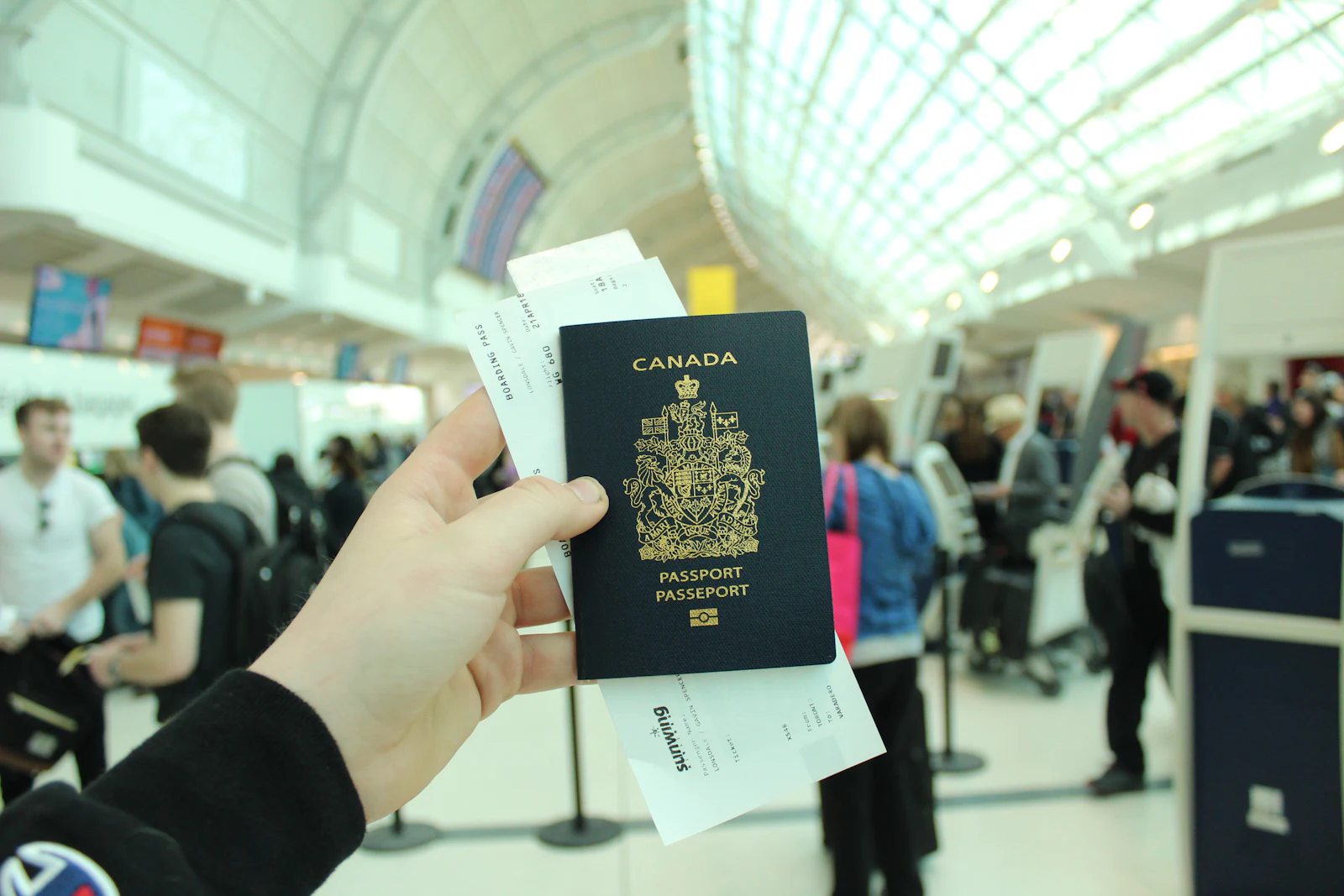
Becoming a citizen, or discovering you already are one: a moment that matters.
Frequently asked questions
Does time spent in Canada before permanent residence count?
Partly. Each day spent in Canada as a temporary resident or protected person during the last five years counts as half a day, up to a maximum of 365 days.
Do I need to take a language test?
People aged 18 to 54 must demonstrate adequate knowledge of French or English. Several types of proof are accepted, including certain diplomas and recognized test results.
Can my minor children become citizens?
Yes. An application can be submitted for a minor child who is a permanent resident, at the same time as the parent’s or afterwards. The child does not have to meet the physical presence requirement.
Can I travel while my application is being processed?
Yes, but you must be able to attend the test, an interview or the ceremony when you are invited. Let us know about your travel plans.
Let’s talk about your situation
A consultation with the lawyer to take stock and leave with clear answers.
What happens after your consultation
Every mandate begins with a consultation. You always know where your file stands and what comes next.
Legal consultation
You explain your situation to the lawyer. She answers your questions and assesses the possible options.
Full handling of your file
We take care of your file from start to finish.
Review of your file
You prepare your file; the lawyer reviews it before submission.